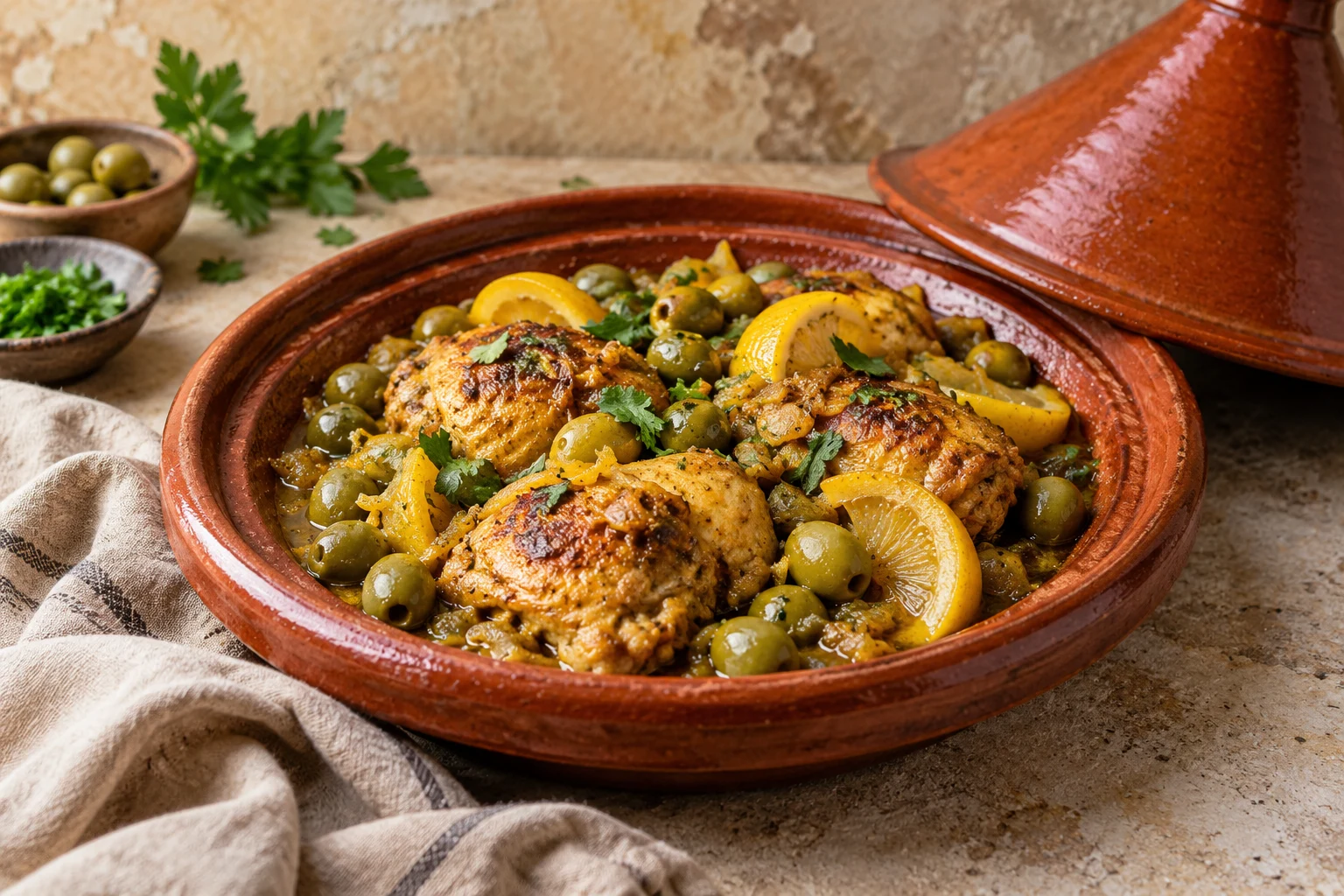
The conical lid of a tagine makes an immediate impression. What lies beneath it deserves just as much attention. In Morocco, tagine refers both to the cooking vessel and to a family of dishes. A photograph of one chicken preparation is only a small window into a much broader tradition.
One name, many possibilities
The Moroccan National Tourist Office describes tagines with fish, chicken, meat or vegetables, and preparations that may include nuts, plums or apricots. The name is not a fixed ingredient list. This is useful to remember when a menu simply says “tagine”: the words that follow tell you much more about what will arrive.
Read the balance
Think about how the components work together. A savoury base can meet the brightness of preserved lemon, the briny character of olives, or the sweetness of dried fruit. These are different directions rather than ingredients that must all share one pot. Let the particular preparation introduce itself.
Beyond the familiar photograph
Moroccan cooking also includes breads, soups, couscous and many other foods. Tagine makes a memorable starting point, but a single famous dish cannot stand in for the country. A thoughtful food journey leaves room for regional and household variation—and for the dish you did not already know by name.
A familiar shape can hold an unfamiliar story.
Sources & further reading
Moroccan National Tourist Office · Food & Drink ↗An introductory editorial guide. Food practices and names vary between communities and households. Sources reviewed October 2026.