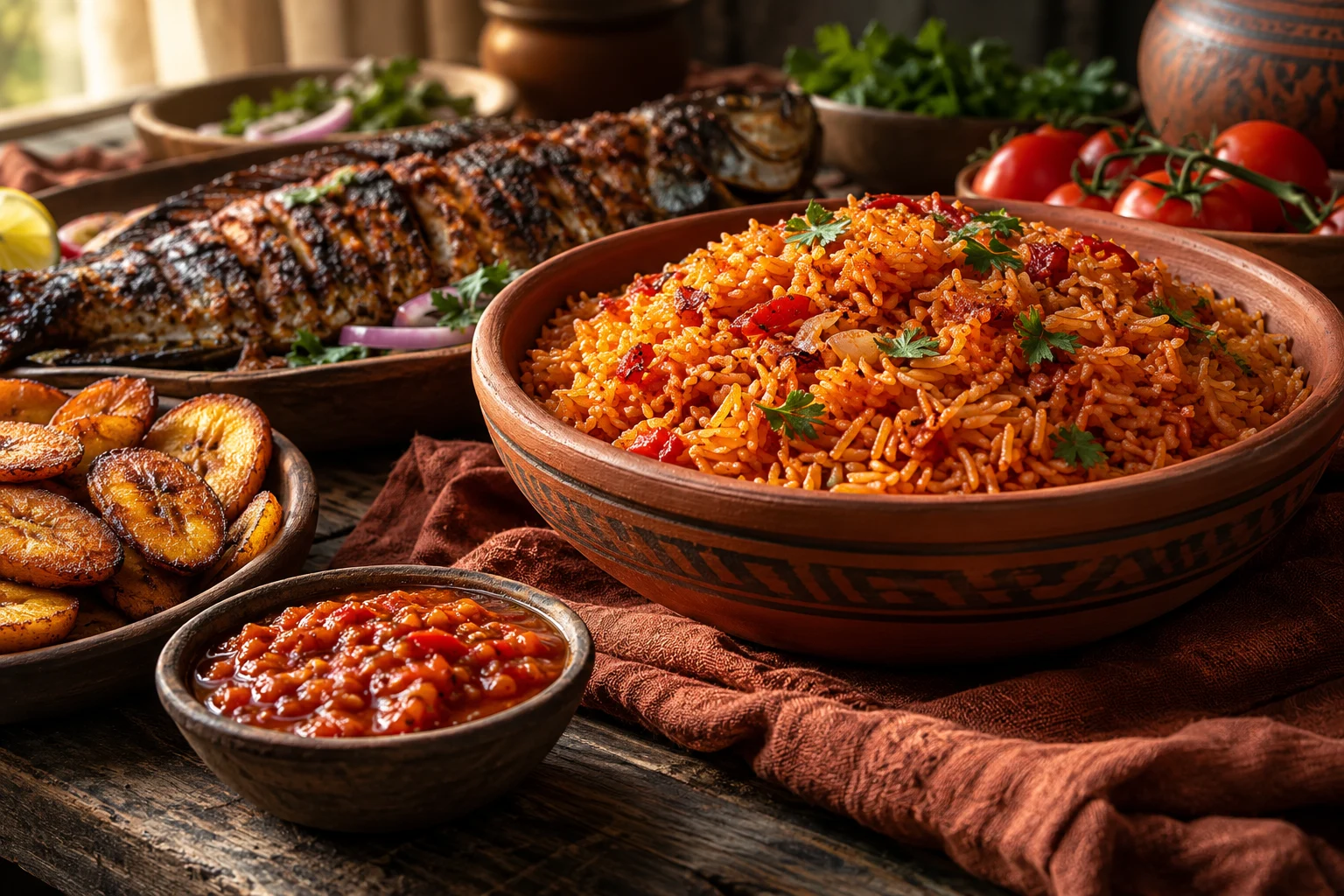
Ceebu jën is a Senegalese fish-and-rice dish with a cultural life beyond its ingredient list. UNESCO traces the tradition to the fishing communities of Saint-Louis and describes it as an affirmation of Senegalese identity. Its inscription in 2021 recognises both the dish and its associated practices.
A dish with room for variation
UNESCO describes rice, fish and seasonal vegetables while noting variation between regions. That flexibility matters: a culinary tradition can remain recognisable without every cook producing an identical plate. Treat an ingredient list as an introduction to a family of practices, not a rigid border.
The meal includes the gathering
Preparation, presentation and behaviour around a shared dish are part of the tradition UNESCO documents. A meal is not only something to photograph. It can also be a setting for learning how to share space, attention and food.
Follow its own story
Ceebu jën belongs in a wider exploration of West African rice dishes, but it deserves its own name and context. When learning about an unfamiliar food, start with the people and place attached to it. Comparison becomes richer after the individual tradition has had room to speak.
A dish can nourish a sense of belonging.
Sources & further reading
UNESCO · Ceebu Jën, a culinary art of Senegal ↗An introductory editorial guide. Food practices and names vary between communities and households. Sources reviewed October 2026.