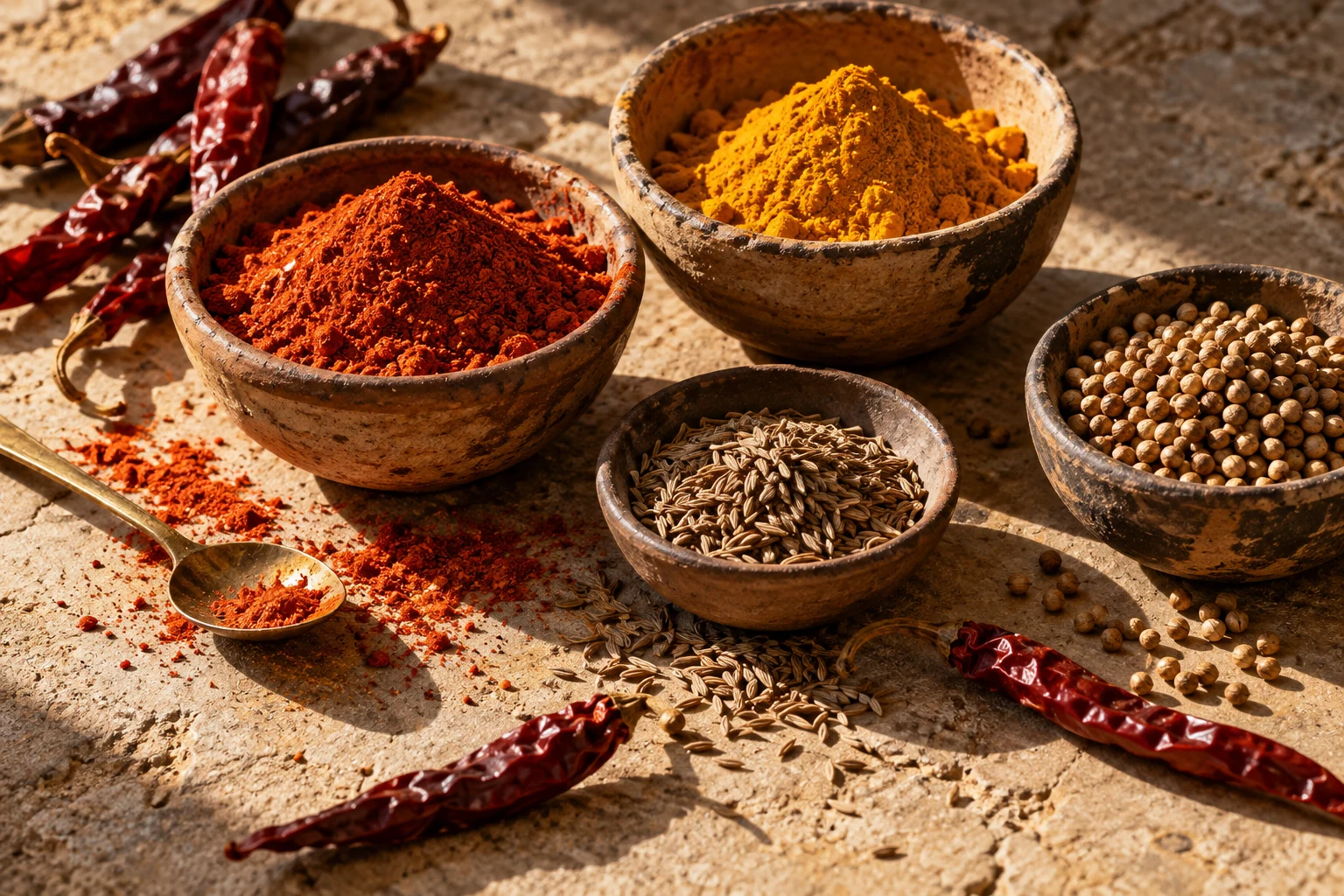
Harissa is easy to describe as a hot sauce and just as easy to underestimate that way. The chilli pepper paste has a central place in Tunisian food culture. The FAO frames it as both a culinary product and a tradition connected to identity, craft and rural livelihoods.
Start with flavour
Heat is only one dimension to notice when tasting a condiment. Pay attention to aroma, texture, seasoning and how it changes the food beside it. Begin with a small amount and taste as you go. The aim is to understand the particular paste in front of you, not to prove a tolerance for chilli.
A product with people behind it
Looking at harissa through the lens of farming and production shifts attention away from a jar on a shelf. The FAO’s Tunisia programme connects the product with growers and craftsmanship. Food culture includes this work as well as the recipes that eventually use the ingredient.
Read the jar
Commercial preparations differ. Read an individual label to learn its ingredients and storage directions instead of assuming all harissa is interchangeable. In our pantry guide, harissa is a starting point for exploring Tunisian flavour; it is not a universal shorthand for North African cooking.
The most interesting thing about a condiment is rarely just its heat.
Sources & further reading
FAO · Tunisia: Harissa, a culinary heritage ↗An introductory editorial guide. Food practices and names vary between communities and households. Sources reviewed October 2026.