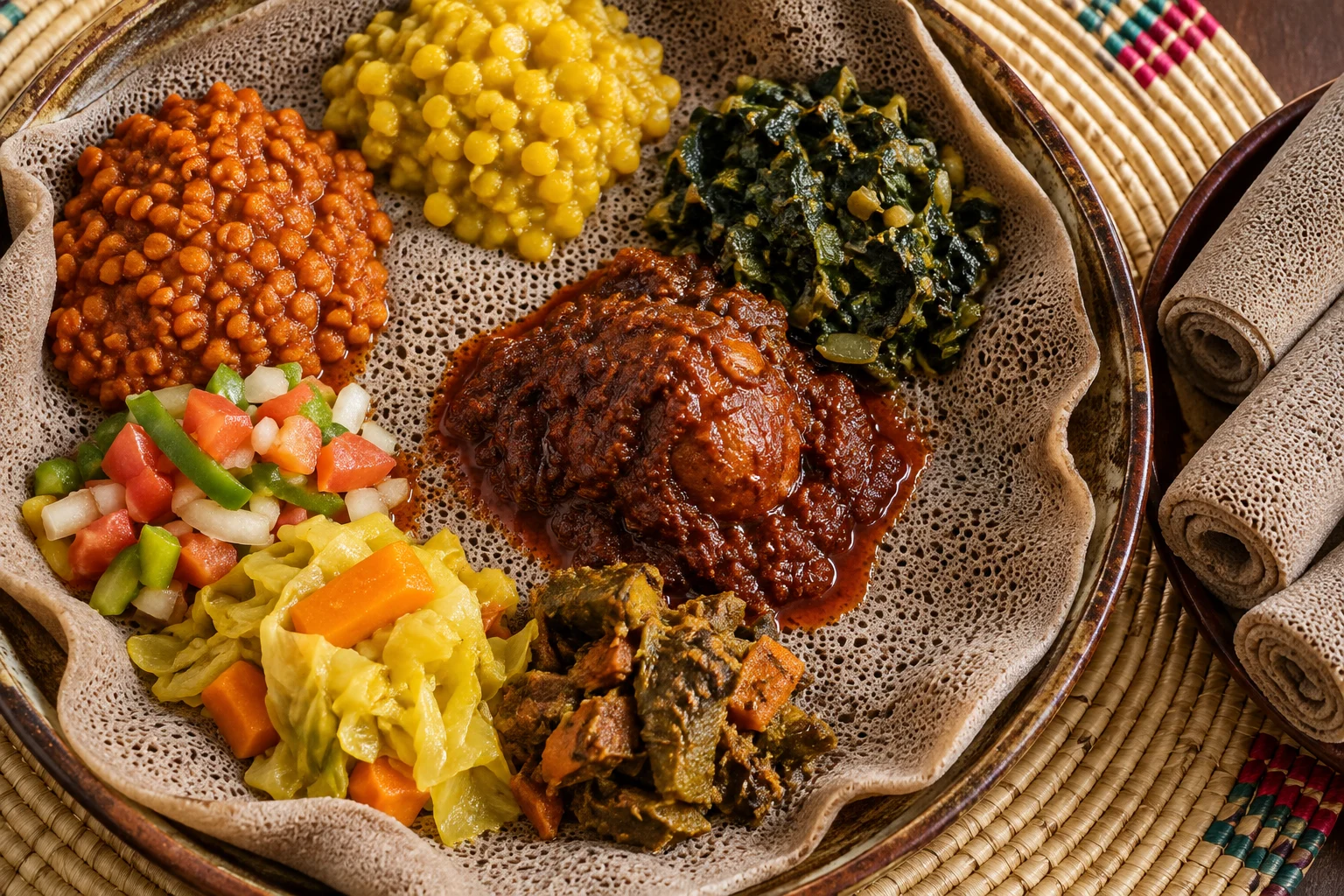
Look closely at injera and you will see a landscape of tiny pores. This soft fermented flatbread is central to many Ethiopian and Eritrean meals. Teff is a common grain used to make it; flour blends also exist. Its gentle sourness and absorbent texture make the bread an active part of the meal, rather than a neutral backdrop.
A bread with a purpose
EthnoMed describes injera alongside wot: stews made with spices, meat or pulses, including lentils, beans and split peas. Bread and accompaniment work together. A rich stew meets a tangy bite of injera; a softer vegetable preparation offers another contrast. Notice each combination before assuming that the platter has one uniform flavour.
Texture tells a story
The surface of injera is part of what makes it distinctive. Instead of the crumb of a sliced loaf, you encounter a flexible, porous sheet. That texture helps the bread hold the foods served with it. Teff itself is a very small grain, but its presence in the finished meal is anything but small.
Approach with curiosity
There is no reason to treat an unfamiliar way of eating as a performance. When sharing a meal, follow your host’s guidance and ask how they enjoy it. Recipes, accompaniments and habits vary. A single restaurant platter offers an introduction, not an exhaustive portrait of two countries’ food cultures.
The bread is not an afterthought. It is part of every bite.
Sources & further reading
EthnoMed, University of Washington · More About Ethiopian Food: Teff ↗An introductory editorial guide. Food practices and names vary between communities and households. Sources reviewed October 2026.