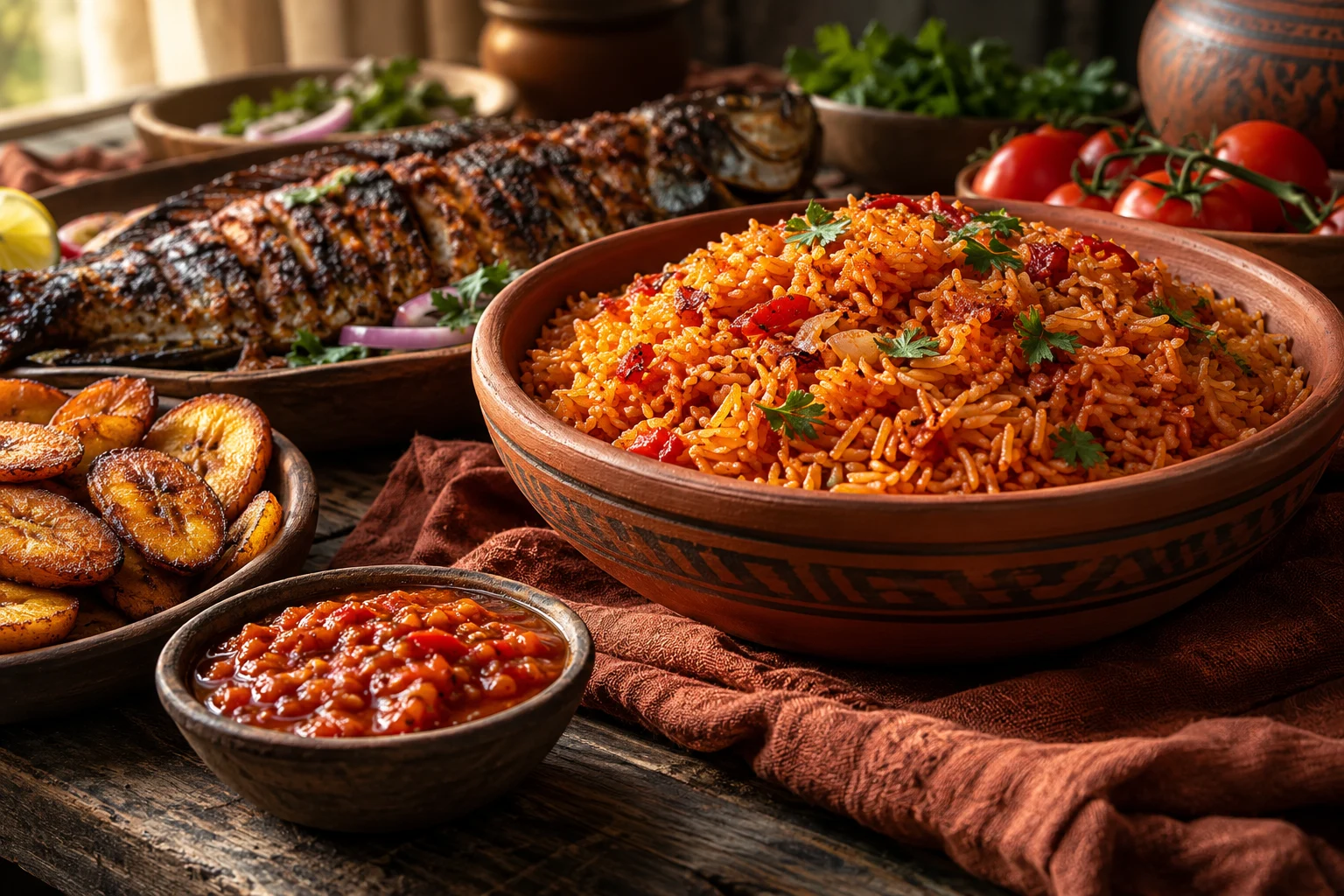
A pot of jollof is a good place to begin exploring West African food. Rice takes on the colour and flavour of a seasoned tomato-and-pepper base, becoming a dish with a strong identity and countless personal interpretations. The details matter: the grain, the balance of seasoning, the texture, and the way the heat is managed.
More than a two-country conversation
Ghana and Nigeria are familiar names in conversations about jollof. Yet the story is wider. A 2026 NPR report on a Washington, D.C. jollof festival describes cooks representing Nigeria, Ghana, Senegal, Sierra Leone and Liberia, alongside the United States. The diaspora is part of the conversation, too. A friendly rivalry can open the door to discovery, as long as it does not become the whole story.
Taste the details
When tasting jollof, pay attention to the rice itself. Is each grain separate? How deeply has the sauce coloured it? Is the pepper bright, gentle or assertive? A smoky note can be another part of the experience, but no single sensation defines every version. These questions invite comparison without reducing a family dish to a competition.
Keep following the rice
Read about Senegal’s ceebu jën next: a distinct fish-and-rice tradition with its own ingredients, practices and cultural meaning. Keeping the names and contexts of dishes visible makes the journey more interesting. Instead of asking for one definitive African rice dish, ask whose table you are learning about.
Start with the dish. Stay for the conversation.
Sources & further reading
NPR / Georgia Public Broadcasting · Jollof across borders ↗UNESCO · Ceebu Jën, a culinary art of Senegal ↗
An introductory editorial guide. Food practices and names vary between communities and households. Sources reviewed October 2026.